×

Director magazine
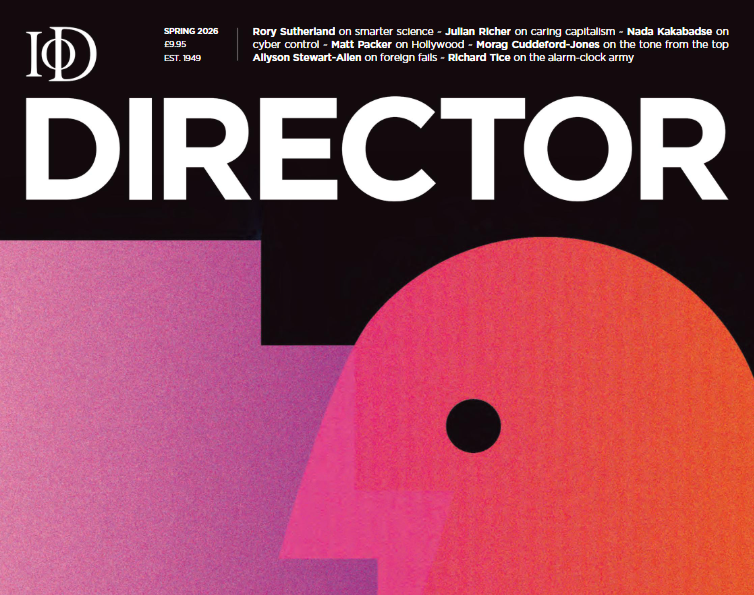
The latest Director magazine (Institute of Directors (IoD), Spring 2026) is as you would expect at board level: growth, productivity, AI, governance, and risk. All important, necessary, and familiar. And mid-way through it turns its lens to something more uncomfortable for many, not strategy, structure, or restructure but what all of this is actually doing to people.
This is exactly the conversation we need to be having. We are not operating in a normal change environment anymore; we are operating in chronic transformation as the external conditions dictate. Multiple programmes, overlapping priorities, relentless pace and a growing gap between what is said at board level and what is felt across the organisation. That gap has a cost. Not just in wellbeing terms (though that matters) but in decision quality, trust, execution and ultimately performance.
- My contribution to this issue focuses on transformation fatigue. Not as a critique of ambition. Not as a plea to slow everything down. But as a reality check:
- What happens when capable, committed people quietly exceed their psychological capacity for change.
- Why “resistance” is so often misread and what it’s actually telling you about your system.
- How initiative overload and inconsistent narratives erode even the strongest cultures.
- What leaders can practically do to restore energy, clarity and traction without diluting accountability.
Fatigue is not always as obvious as people saying “I’m overwhelmed”, the indicators can include, polite agreement and slow delivery, decisions revisited again and again, good people withdrawing, or leaving and leaders carrying more and trusting less.
In other words, it shows up as a performance issue long before anyone names it as a human one. This is what I am increasingly seeing in my work with boards and executive teams. The organisations that will outperform over the next 3–5 years will not be the ones doing the most transformation, even if it is necessary. They will be the ones who understand the limits of human capacity within it and lead accordingly.
A different kind of leadership. One that is more precise, more boundaried, more psychologically literate, not necessarily softer, just more accurate. If you’re a director reading this and thinking, “this is exactly what we’re seeing, but we haven’t quite said it”, then you are at the point where the work starts to get interesting.
Here is a link to the magazine, I was delighted to feature in the same edition as people such as Rory Sutherland, Julien Richer, and Nada Kakabadse. So please do read more than just pages 40-42 where I feature!